
Inuit of Greenland (Kalaallit)
Population and Identity
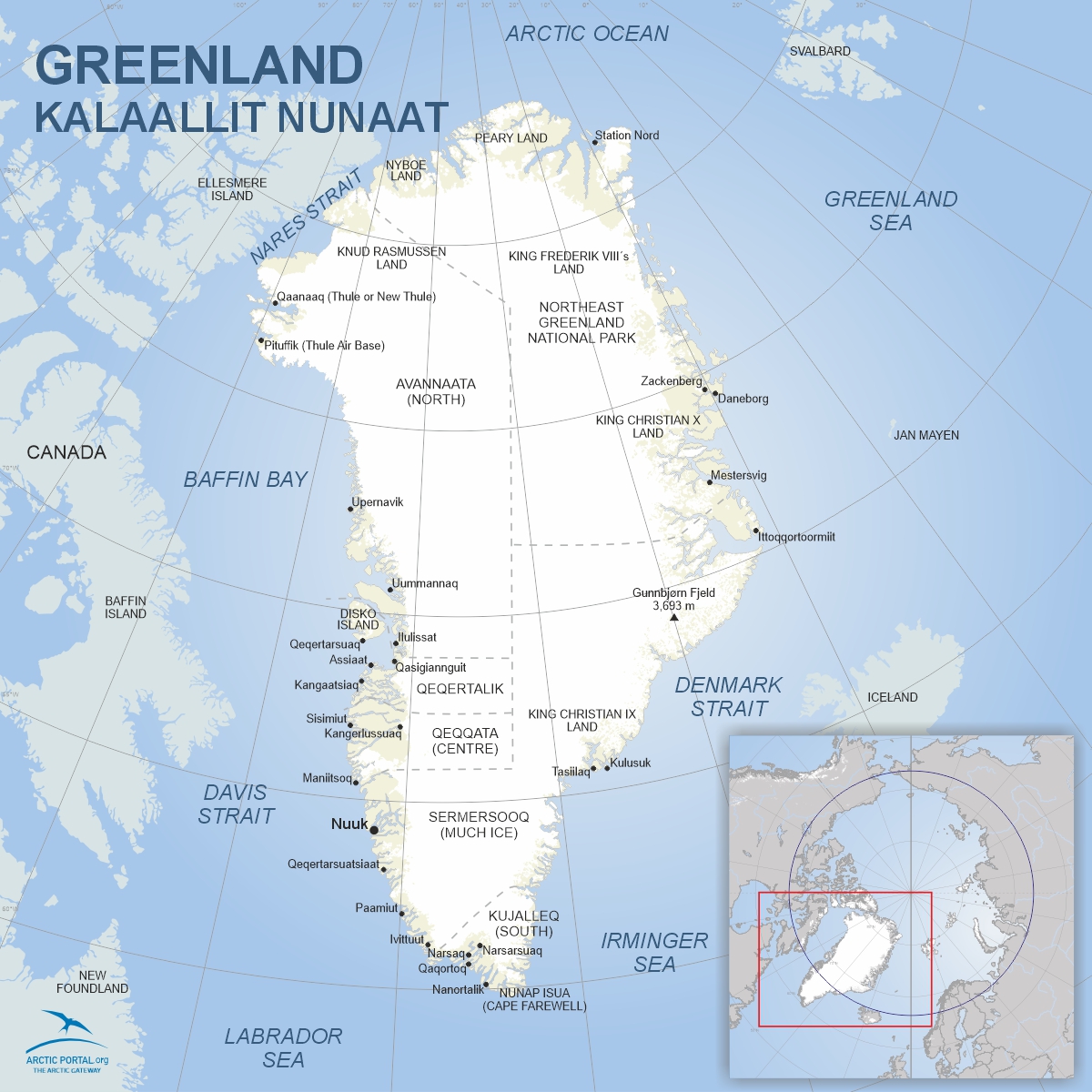
Greenland, known in Greenlandic as Kalaallit Nunaat, had a population of 56,740 on 1 January 2026. Approximately 88% of residents were born in Greenland and 12% outside Greenland. These figures describe birthplace rather than ethnic identity. Most of Greenland’s population is Inuit, and the majority of Greenlandic Inuit refer to themselves as Kalaallit, meaning “Greenlanders”.
Greenlandic Inuit share cultural and historical connections with Inuit across the circumpolar Arctic, while maintaining distinct regional identities, languages and traditions. These include the Kalaallit of West Greenland, the Inuit of East Greenland, also known as Tunumiit or Iivit, and the Inughuit of north-western Greenland.
Early Inuit Settlement
Today’s Greenlandic Inuit descend primarily from Inuit associated with the Thule culture, who migrated eastwards through Arctic Canada and reached Greenland around AD 1200. Earlier populations, including people associated with the Dorset culture, had inhabited parts of Greenland before their arrival.
Thule Inuit brought sophisticated knowledge and technologies suited to Arctic life, including kayaks, skin boats, dog sledges and specialised hunting equipment. Their livelihoods depended on marine mammals, particularly seals and whales, alongside caribou, fish and other local resources. As climatic conditions changed during the period commonly known as the Little Ice Age, communities adapted their hunting practices, seasonal movements and settlement patterns.
Early European Contact
Norse settlers from Iceland established communities in southern and western Greenland around AD 985. These settlements existed for several centuries, with archaeological evidence indicating that the Eastern Settlement remained inhabited into the 15th century. The later arrival of Thule Inuit meant that Inuit and Norse populations inhabited Greenland during overlapping periods.
European voyages to Greenland increased again from the late 16th century. The English explorer John Davis visited Greenland during his expeditions of 1585–1587 in search of the Northwest Passage. In subsequent centuries, European whalers and traders developed contacts with Greenlandic Inuit, exchanging imported goods for products such as blubber, baleen and animal skins.
Contact introduced new goods and materials, but it also exposed communities to infectious diseases with devastating consequences. A major smallpox epidemic in 1733–1734 caused severe population losses in the Nuuk region and surrounding areas.
Colonial Period and Missionary Influence
The Danish–Norwegian colonisation of Greenland began in 1721 with the arrival of the Lutheran missionary Hans Egede. Missionary activity became closely connected with the establishment of colonial settlements and organised trade. Moravian missionaries arrived in 1733 and subsequently established several mission stations along Greenland’s west coast.
Missionaries promoted Christianity and European forms of schooling and literacy, while colonial trading institutions increasingly shaped economic life. Inuit communities participated in trade involving marine mammal products and animal skins, acquiring imported tools, clothing and other goods. These developments brought substantial changes to religious practices, livelihoods and social relations.
Political Development and Self-Government
In 1953, Greenland’s formal status as a Danish colony ended, and it became an integral part of the Kingdom of Denmark. Home Rule was introduced in 1979, transferring responsibility for many domestic affairs to Greenland’s own political institutions.
A referendum held on 25 November 2008 resulted in 75.5% of votes being cast in favour of self-government. The Self-Government Act entered into force on 21 June 2009, replacing the Home Rule arrangement and recognising the Greenlandic people’s right to self-determination under international law.
Today, Greenland exercises extensive self-government through its parliament, Inatsisartut, and government, Naalakkersuisut. Denmark retains constitutional responsibility for foreign, defence and security policy, while Greenland conducts international relations and may conclude certain agreements in areas under its own authority. Greenland assumed responsibility for mineral resources in 2010.
Modern Greenlandic Society
Greenland’s towns and settlements are widely dispersed along the coast. Travel between communities relies mainly on boats and aircraft, as there is no nationwide road network. Local transport varies according to geography and season, with dog sledges and snowmobiles also used in some regions.
During the mid-20th century, modernisation and centralisation policies encouraged people to move from smaller settlements to larger towns. These changes expanded access to services and employment but also disrupted established communities and traditional patterns of movement and subsistence.
Contemporary Greenlandic society encompasses both urban and smaller coastal communities, with varied livelihoods and ways of life. Hunting, fishing and knowledge of the local environment remain important alongside modern education, public services, businesses and international connections.
Economy and Contemporary Life
Greenland’s economy depends heavily on fishing, with fish and shellfish accounting for more than 90% of goods exports. Prawns, Greenland halibut and cod are among the most important commercial species. Tourism and mineral development are also important areas of economic diversification, while the annual Danish block grant contributes to public finances.
The Greenlandic language and culture remain central to national identity. Greenlandic is the official language, while Danish is also widely used. Regional languages and varieties, oral traditions, storytelling and knowledge passed between generations form important parts of Greenland’s cultural heritage.
A Changing Arctic Homeland
Greenland’s Inuit communities are navigating environmental, economic and political change. Changes in sea ice and weather affect travel, hunting and everyday life, while international interest in Greenland’s resources and strategic position continues to shape discussions about its future.
Kalaallit Nunaat is a contemporary Arctic society with deep historical roots. Its people continue to maintain and renew their cultural heritage while shaping their own social, economic and political future.
Source: The Arctic by Richard Sale, Arctic Human Development Report