Indigenous People of the Arctic - Khanty
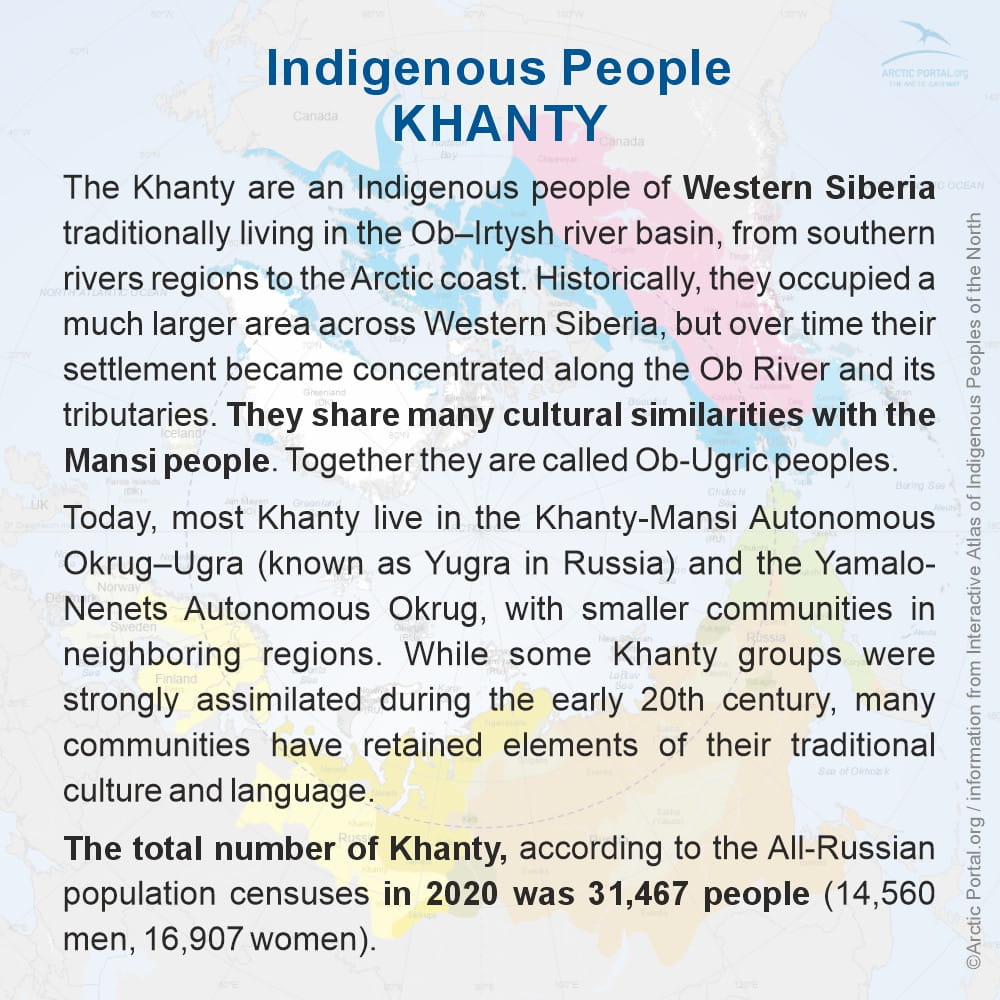
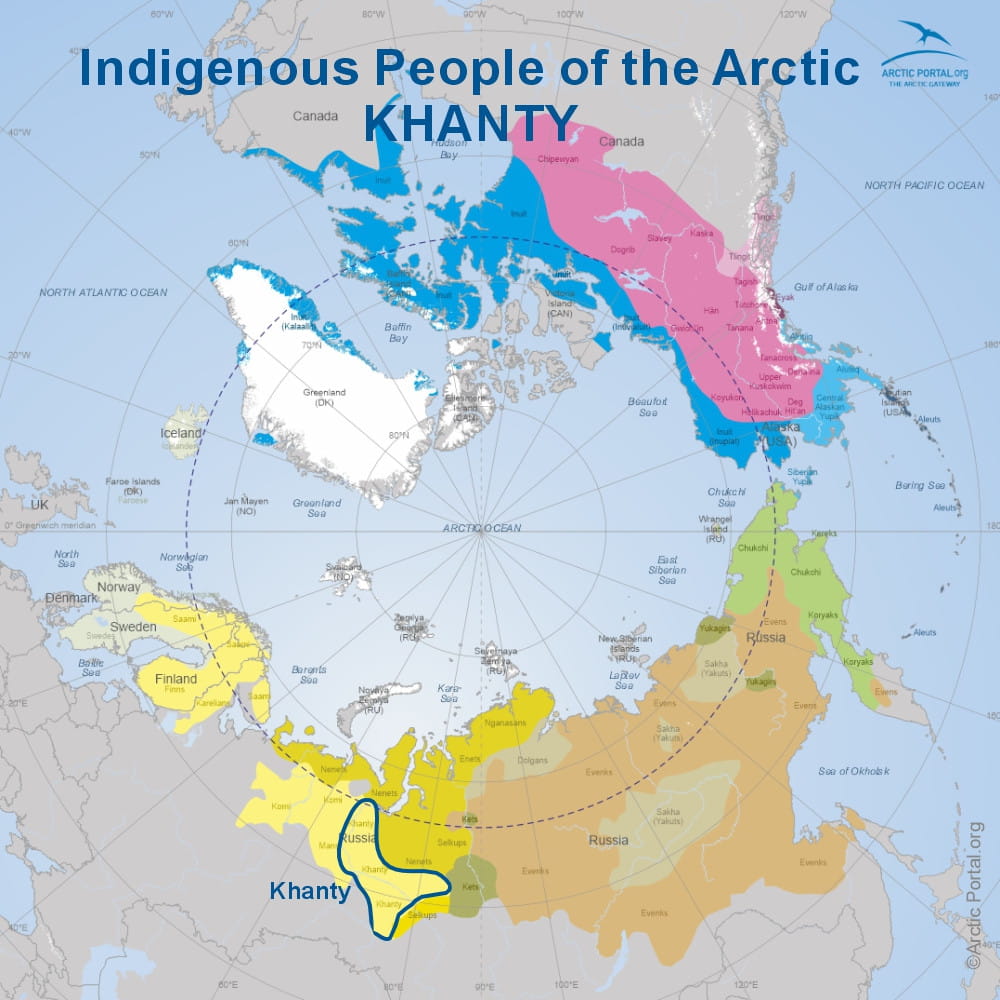
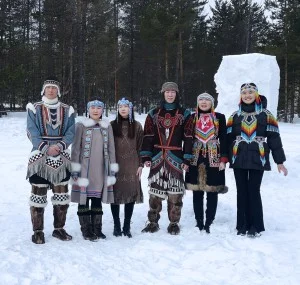
The Khanty are an Indigenous people of Western Siberia traditionally living in the Ob-Irtysh river basin, from southern rivers regions to the Arctic coast. Historically, they occupied a much larger area across Western Siberia, but over time their settlement became concentrated along the Ob River and its tributaries. They share many cultural similarities with the Mansi people. Together they are called Ob-Ugric peoples.
Today, most Khanty live in the Khanty-Mansi Autonomous Okrug-Ugra (known as Yugra in Russia) and the Yamalo-Nenets Autonomous Okrug, with smaller communities in neighboring regions. While some Khanty groups were strongly assimilated during the early 20th century, many communities have retained elements of their traditional culture and language.
The total number of Khanty, according to the All-Russian population censuses in 2020 was 31,467 people (14,560 men, 16,907 women).
People & Language
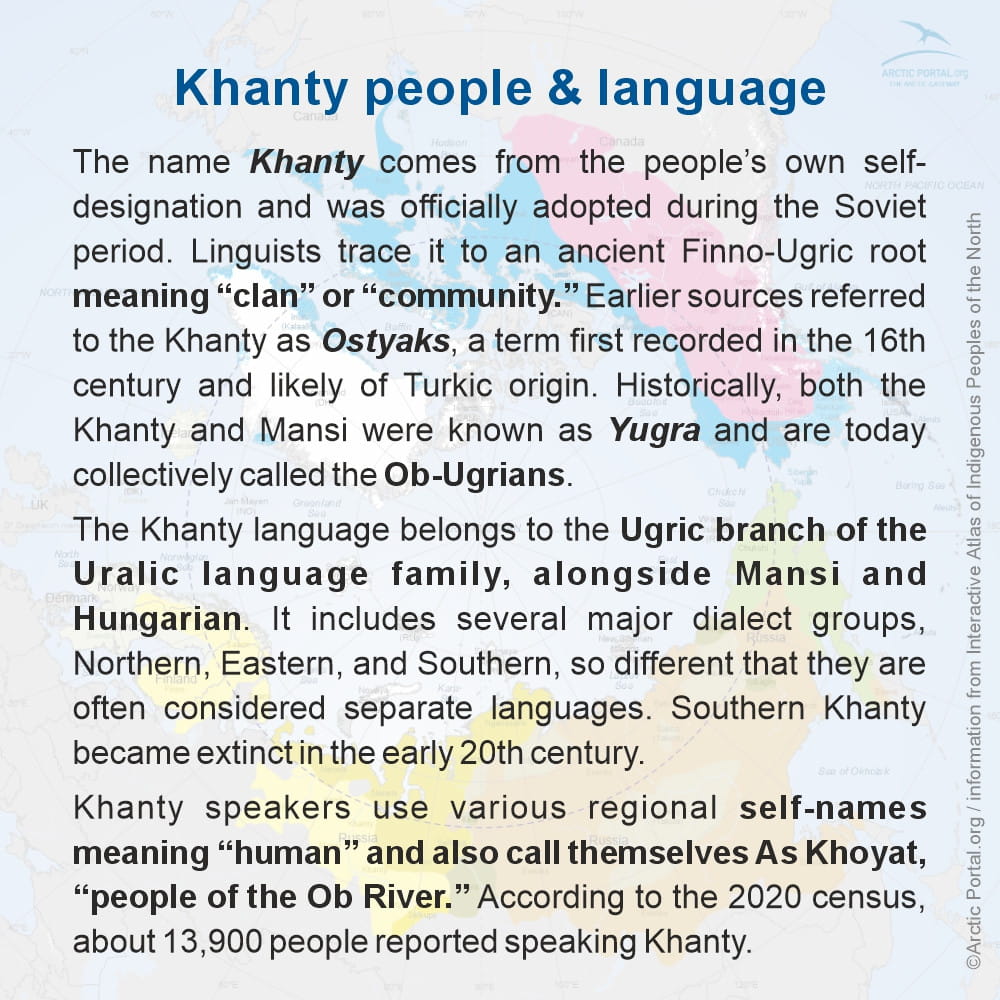
The name Khanty comes from the people's own self-designation and was officially adopted during the Soviet period. Linguists trace it to an ancient Finno-Ugric root meaning "clan" or "community". Earlier sources referred to the Khanty as Ostyaks, a term first recorded in the 16th century and likely of Turkic origin. Historically, both the Khanty and Mansi were known as Yugra and are today collectively called the Ob-Ugrians.
The Khanty language belongs to the Ugric branch of the Uralic language family, alongside Mansi and Hungarian. It includes several major dialect groups, Northern, Eastern, and Southern, so different that they are often considered separate languages. Southern Khanty became extinct in the early 20th century.
Khanty speakers use various regional self-names meaning "human" and also call themselves As Khoyat, "people of the Ob River". According to the 2020 census, about 13,900 people reported speaking Khanty.
People & Culture
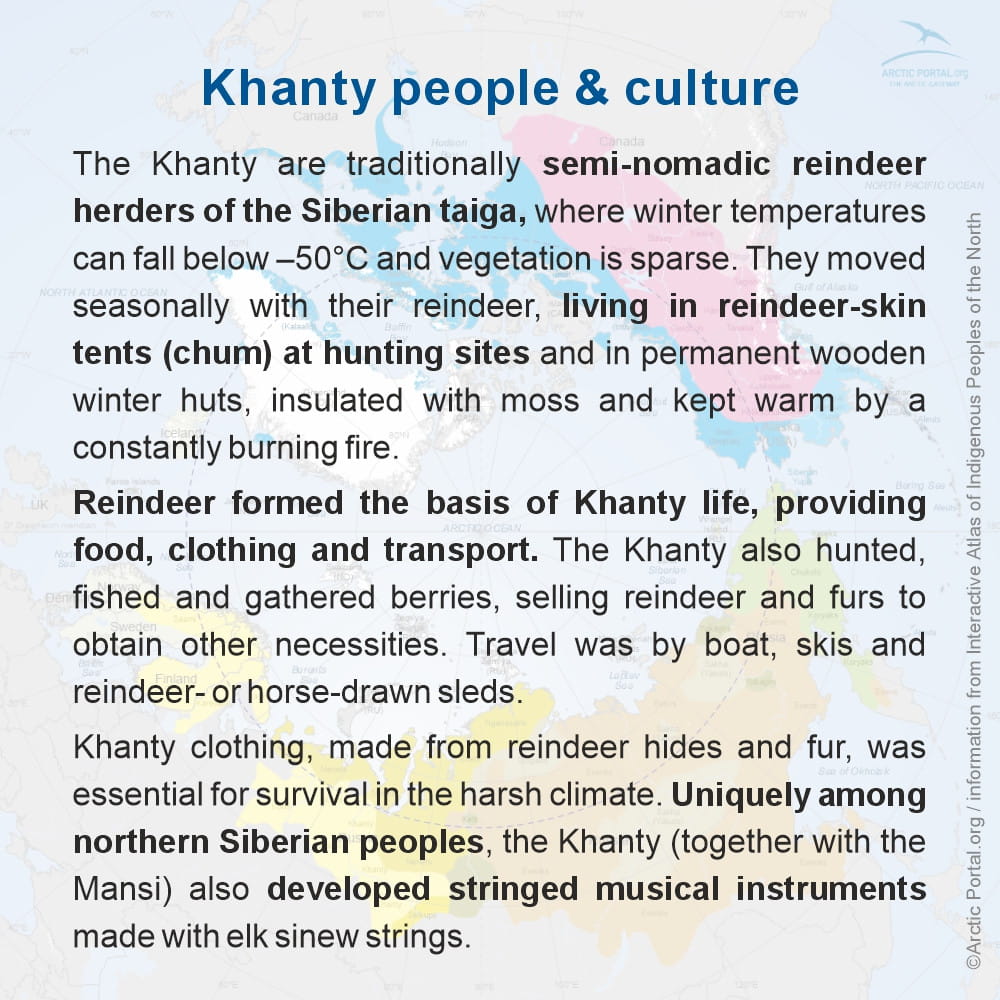
The Khanty are traditionally semi-nomadic reindeer herders of the Siberian taiga, where winter temperatures can fall below -50°C and vegetation is sparse. They moved seasonally with their reindeer, living in reindeer-skin tents (chum) at hunting sites and in permanent wooden winter huts, insulated with moss and kept warm by a constantly burning fire.
Reindeer formed the basis of Khanty life, providing food, clothing and transport. The Khanty also hunted, fished and gathered berries, selling reindeer and furs to obtain other necessities. Travel was by boat, skis and reindeer- or horse-drawn sleds.
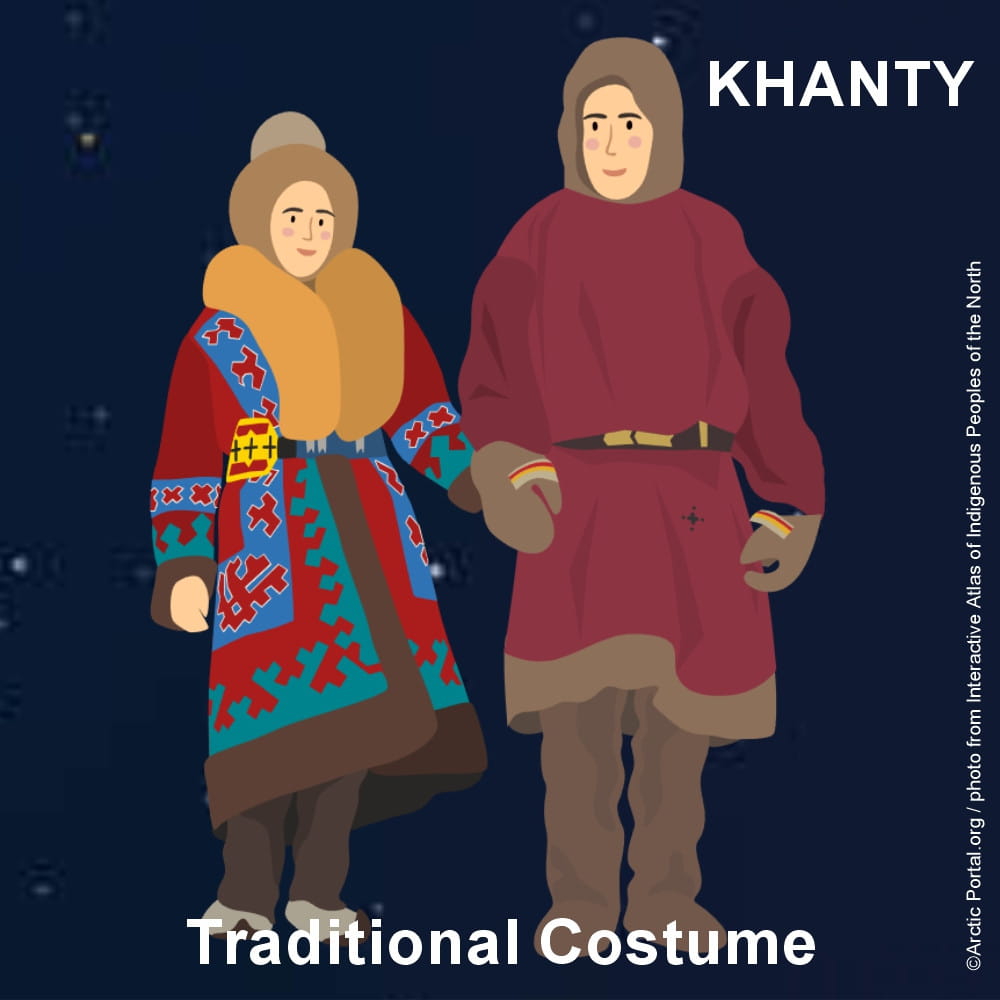
Khanty clothing, made from reindeer hides and fur, was essential for survival in the harsh climate. Uniquely among northern Siberian peoples, the Khanty (together with the Mansi) also developed stringed musical instruments made with elk sinew strings.
Spiritual Culture of the Evens
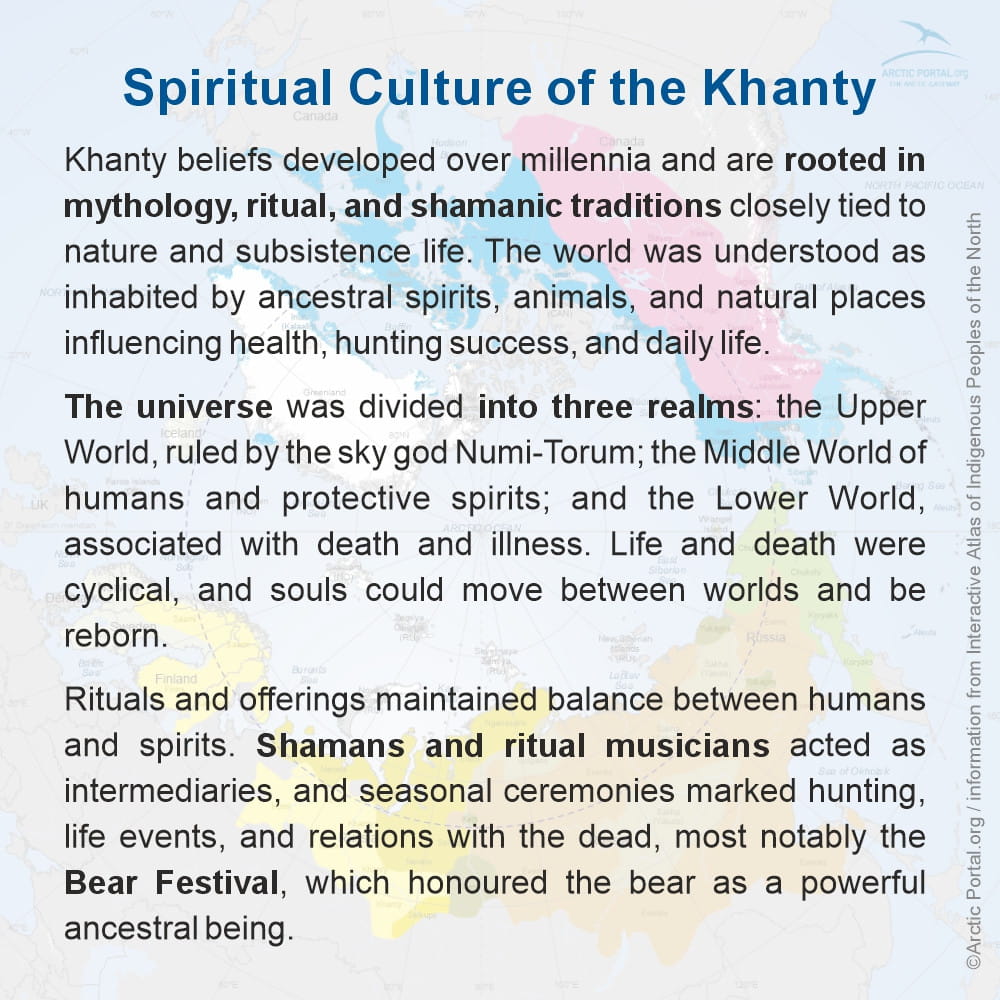
Khanty beliefs developed over millenia and are rooted in mythology, ritual, and shamanic traditions closely tied to nature and subsistence life. The world was understood as inhabited by ancestral spirits, animals, and natural places influencing health, hunting success, and daily life.
The universe was divided into three realms: the Upper World, ruled by the sky god Numi-Torum; the Middle World of humans and protective spirits; and the Lower World, associated with death and illness. Life and death were cyclical, and souls could move between world and be reborn.
Rituals and offerings maintained balance between humans and spirits. Shamans and ritual musicians acted as intermediaries, and seasonal ceremonies marked hunting, life events, and relations with the dead, most notably the Bear Festival, which honoured the bear as a powerful ancestral being.
Source: Interactive atlas of indigenous peoples of the North, Siberia and the Far East
Visit our Map Gallery Arctic Portal specializes in creating customized graphical maps that cover a range of significant Arctic topics with global recognition. We are continuously working on new maps and adding them to our Gallery.