
News
Sweden Unveils New Arctic Strategy Focused on Security, Sustainability and Regional Development
The Swedish Government has presented a comprehensive new Arctic Strategy that reflects the region's growing geopolitical importance while reaffirming Sweden's commitment to international cooperation, sustainable development and environmental protection.
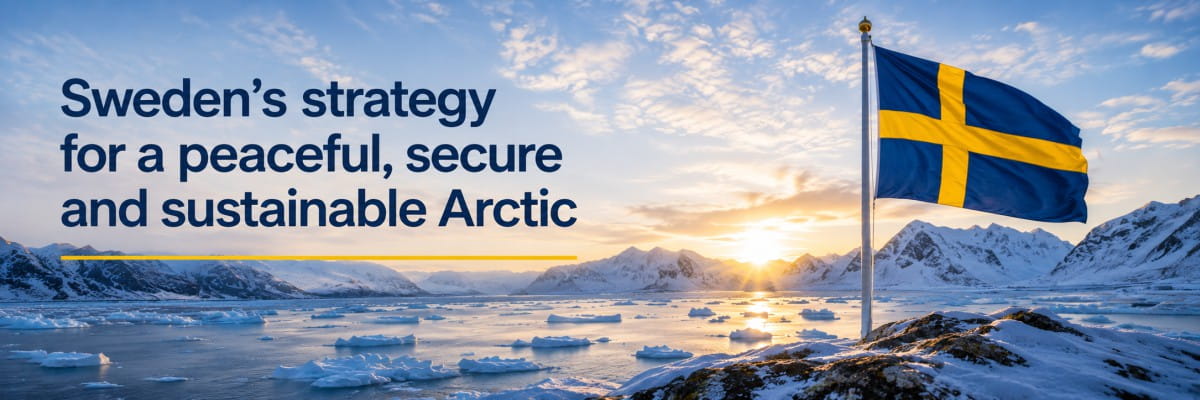
The strategy, adopted on 28 May 2026, outlines Sweden's vision for "a peaceful and secure Arctic, with sustainable, robust and attractive communities and reduced environmental and climate impact." It marks a significant shift from previous Arctic policies by placing security and defence at the centre of Sweden's approach alongside climate action, economic development and scientific research.
Security Takes Centre Stage
The new strategy reflects the evolving geopolitical landscape and Sweden's accession to NATO. The Government describes the Arctic as having evolved from a region of relatively low tension into an area of increasing strategic competition among major powers.
Recognising that the Arctic, the High North and the Baltic Sea now form a single strategic area, Sweden plans to deepen defence cooperation within NATO, strengthen military mobility and continue developing Arctic and subarctic operational capabilities.
A 10-Point Plan for the Arctic
The strategy is built around ten priority areas, including:
- strengthening international law and peaceful cooperation;
- enhancing defence and security cooperation;
- supporting sustainable regional development in Arctic Sweden;
- promoting responsible economic growth;
- accelerating climate action and biodiversity protection;
- investing in polar research, space capabilities and digital infrastructure;
- strengthening the Arctic Council;
- expanding Nordic and EU cooperation; and
- increasing Sweden's international Arctic expertise.
The Government intends the strategy to guide Swedish Arctic policy over the next five years while remaining flexible enough to respond to changing circumstances.
Balancing Growth with Sustainability
While security receives greater emphasis than in previous strategies, Sweden also highlights the Arctic's economic potential.
Northern Sweden is home to significant deposits of iron ore, rare earth elements and other critical minerals that are increasingly important for Europe's green transition and technological development. The Government supports responsible mining, renewable energy, fossil-free industry and sustainable infrastructure while stressing that development must respect environmental standards, international law and the rights of Indigenous Peoples.
The strategy also notes that melting sea ice may create new shipping opportunities in the Arctic, although it warns that expanding maritime activity also brings environmental, safety and geopolitical challenges.
Climate Change Remains a Defining Challenge
The Government recognises that the Arctic is warming nearly four times faster than the global average, resulting in profound changes to glaciers, sea ice, permafrost and ecosystems.
Sweden commits to supporting the Paris Agreement's 1.5°C target, strengthening biodiversity protection, reducing pollution and expanding environmental monitoring throughout the Arctic. The strategy also underlines the importance of scientific research in improving climate models and informing future policy decisions.
Investing in Arctic Communities and Indigenous Participation
Alongside defence and environmental priorities, the strategy places considerable emphasis on strengthening Arctic communities.
Measures include improving transport and digital infrastructure, supporting regional development, enhancing healthcare and education, promoting food security and encouraging sustainable tourism.
The Government also reiterates its commitment to the rights of the Sami as Sweden's Indigenous People, recognising the importance of traditional knowledge in environmental management, climate adaptation and regional resilience.
Research and Strategic Resources
Sweden identifies polar research as one of its greatest strategic assets.
The Government plans to strengthen long-term investment in polar science, research infrastructure and international collaboration. It also proposes investigating future access to a new research icebreaker as the icebreaker Oden approaches the end of its operational life.
Other strategic priorities include expanding digital connectivity through Arctic subsea cables, strengthening Sweden's space capabilities centred on the Esrange Space Center near Kiruna, and increasing Sweden's role in Arctic observation and monitoring.
Preparing for Sweden's Arctic Council Chairmanship
The strategy also looks ahead to Sweden's upcoming Chairmanship of the Arctic Council (2027–2029).
The Government describes the Council as the primary forum for cooperation among Arctic states and Indigenous Peoples, despite challenges created by geopolitical tensions following Russia's invasion of Ukraine. Sweden intends to work towards maintaining the Council's relevance while promoting sustainable development, environmental protection and peaceful international cooperation.
More information on the Arctic Council.
Source: Swedish Government
The tags below provide an opportunity to view previously posted related news within the selected category