
News
What Is Greenland and Why is Trump so Interested?
The History of this Big Arctic Island and Why the United States Has Long Taken an Interest. When former U.S. President Donald Trump suggested in 2019 that the United States might want to “buy” Greenland, the idea was widely met with laughter, disbelief, and memes. Greenland’s leaders called the proposal absurd, Denmark firmly rejected it, and the episode seemed to fade into political trivia.
But Trump’s interest in Greenland was not a sudden whim, nor was it unprecedented. In fact, the United States has been eyeing Greenland for strategic reasons since the 19th century. From the purchase of Alaska in 1867 to Cold War defense planning under President Harry Truman, Greenland has long occupied a quiet but persistent place in American geopolitical thinking.
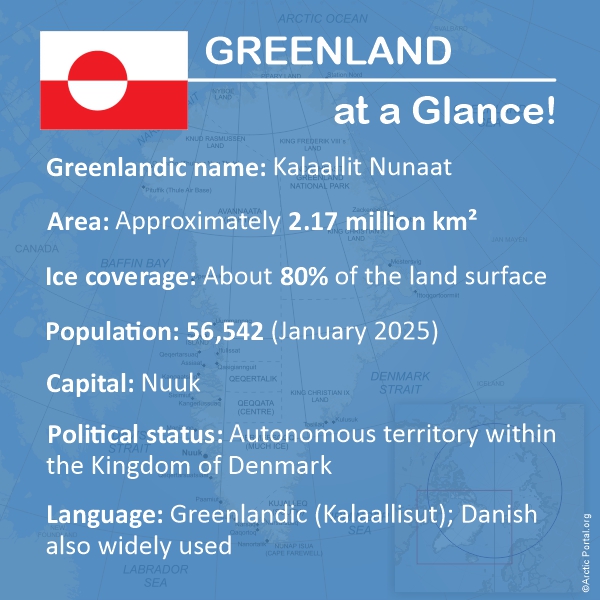 So what is Greenland, and why has it mattered to Washington for more than a century?
Greenland, known in Greenlandic as Kalaallit Nunaat, meaning “the Land of the People”, is the world’s largest island and one of the most geographically distinctive places on Earth. With vast ice sheets, a small population, and a location bridging North America and Europe, Greenland has for centuries occupied a unique place in Arctic and Global history.
Though often described as remote, Greenland has repeatedly found itself at the center of exploration, scientific research, and strategic planning because of its geography, climate, and vast natural resources.
An Island of Ice and People
Greenland’s immense size contrasts sharply with its small population. The majority of Greenlanders are Inuit, living primarily along the island’s western, southern, and eastern coasts, where the climate is more hospitable. The interior of the island is dominated by an ice sheet that reaches depths of more than three kilometers in places.
Politically, Greenland is an autonomous territory within the Kingdom of Denmark. Greenlanders govern most domestic affairs through their own parliament and government. Denmark remains responsible for foreign policy, defense, and monetary issues. Greenland left the European Economic Community in 1985 and today stands outside the European Union, reflecting a long tradition of asserting local control over economic and cultural matters.
The Origins of American Arctic Interest
The United States’ interest in Greenland is rooted in the country’s broader engagement with the Arctic. A defining moment came in 1867, when the U.S. purchased Alaska from Russia. Though ridiculed at the time, the acquisition proved strategically decisive, establishing the United States as a northern power with long-term interests in Arctic geography.
In the decades that followed, Greenland naturally entered American strategic thinking. Located between North America and Europe, the island was viewed as a potential link and buffer in transatlantic travel and communication. By the late 19th and early 20th centuries, American scientists and explorers were active in Greenland, contributing to mapping efforts and polar research.
World War II and Strategic Reality
Greenland’s importance became unmistakable during World War II. When Germany occupied Denmark in 1940, Greenland was suddenly vulnerable. To prevent Axis powers from exploiting the island’s location and weather data, the United States established airfields, weather stations, and defensive infrastructure with the consent of Greenlandic authorities.
During the war, Greenland became a vital node in the North Atlantic, supporting aircraft ferry routes and providing meteorological information essential for Allied operations. Its role demonstrated that Greenland was not merely a distant territory, but a strategic asset in modern warfare.
Truman’s 1946 Offer and the Cold War
As the Cold War emerged, Greenland’s geographic position gained new significance. Long-range bombers and missile technology made the Arctic the shortest route between North America and the Soviet Union.
In 1946, the administration of President Harry S. Truman formally offered to purchase Greenland from Denmark for $100 million in gold. The proposal reflected defense priorities rather than expansionist ideology. Denmark declined, but cooperation continued, allowing the United States to maintain a military presence.
This led to the development of Thule Air Base, today known as Pituffik Space Base, which became a cornerstone of Arctic surveillance, missile warning systems, and later space monitoring throughout the Cold War.
 Climate Change, Resources, and a Changing Arctic
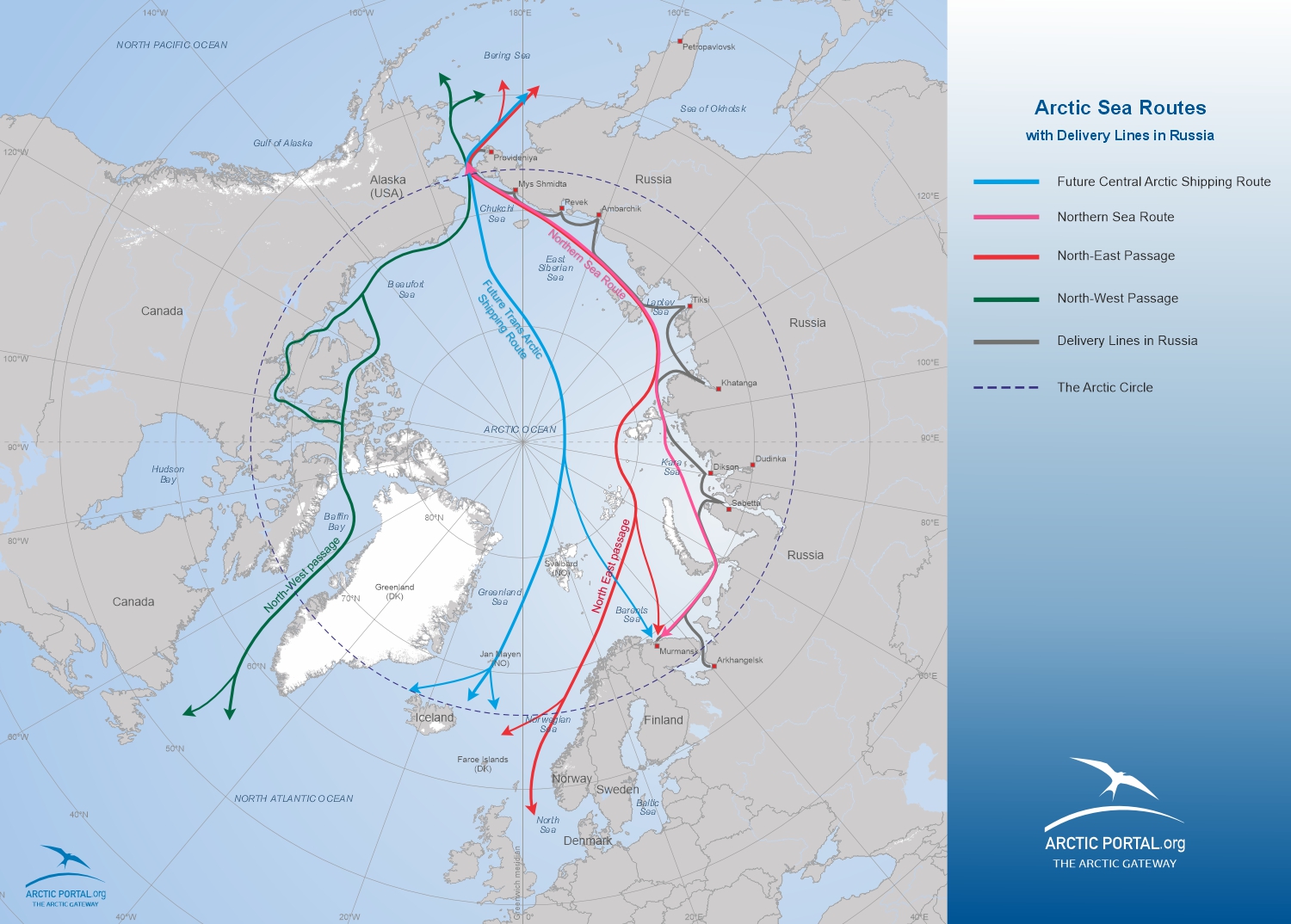 In recent decades, environmental change has transformed the Arctic more rapidly than almost any other region. Rising temperatures have altered sea ice patterns and seasonal accessibility, reshaping how the Arctic is studied, navigated, and understood. Greenland's melting ice is also threatening in a Global context as sea level may rise, threatening current human habitats.
As sea ice is retreating, new Arctic shipping routes have become seasonally navigable. These routes, once the domain of explorers and icebreakers, are now viewed as potential economically viable corridors connecting Europe, Asia, and North America, shortening global travel distances, even if they remain challenging and heavily regulated.
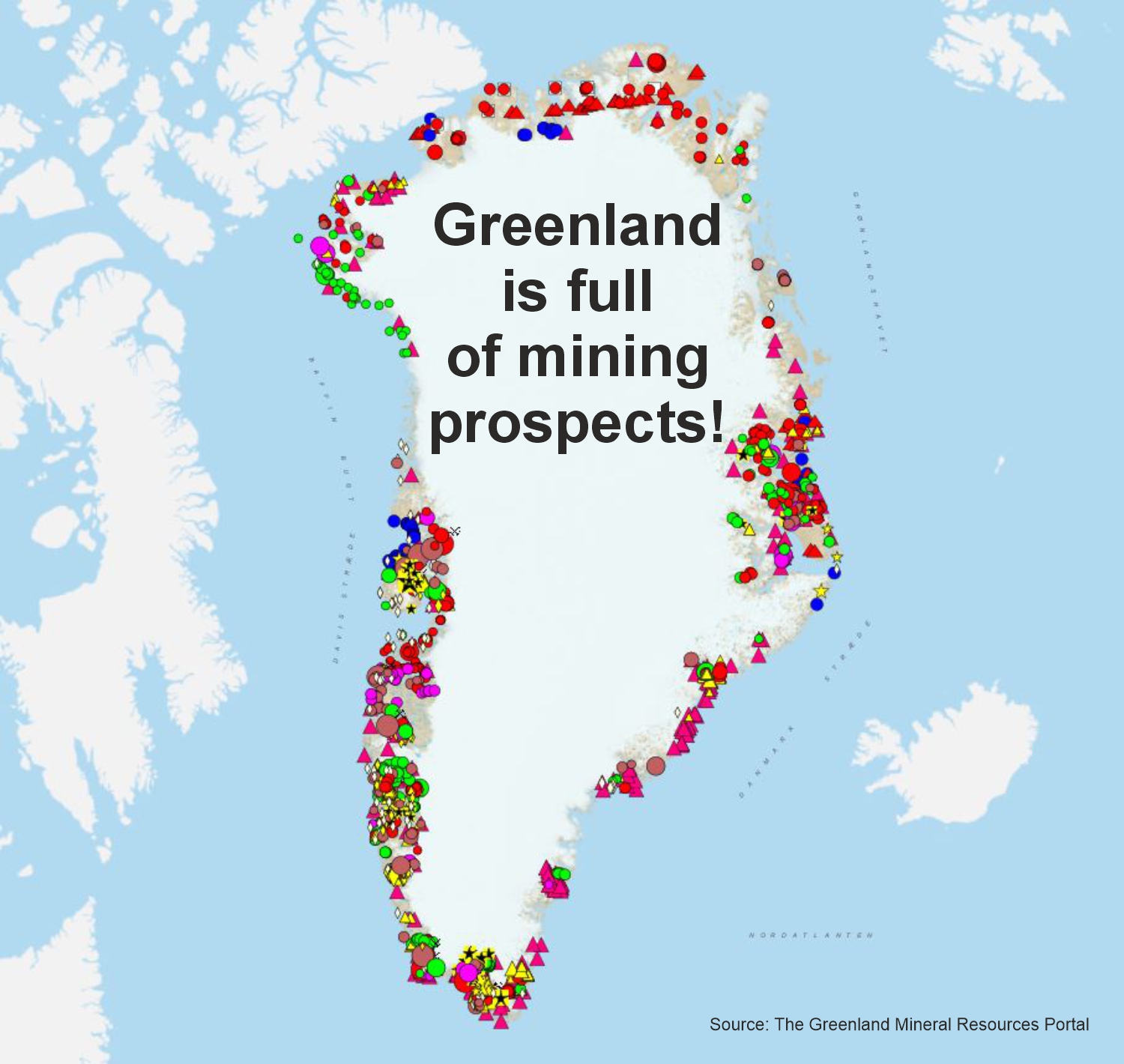
Geological surveys and explorations have long identified ample deposits of various valuable resources, including oil, natural gas, uranium,and multiple rare earth elements beneath Greenland’s surface. Rare earth elements, in particular, are essential for electronics, renewable energy technologies, and advanced industrial applications. Greenland is believed to hold some of the largest undeveloped deposits in the world. Historically, access to critical materials has shaped industrial and military planning, and Greenland’s geology is increasingly becoming a part of that narrative. From a historical perspective, this represents continuity rather than rupture. Greenland’s importance now is thus not least increasing as a response to global technology needs. Climate change has also renewed and increased global attention to Greenland’s natural resources, long known but very difficult and expensive to access due to the harsh and complex environmental conditions, remoteness, and vast distances.
Continuity Into the 21st Century
Through the latter half of the 20th century, Greenland remained strategically significant, even as public attention waned. Military cooperation, scientific research, and diplomatic engagement ensured a lasting international presence on the island.
When a U.S. president publicly raised the idea of acquiring Greenland again in 2019, it was widely treated as an anomaly. Viewed historically, however, it fit a long-standing pattern of American interest stretching back to the Alaska purchase and the early Cold War. The episode drew renewed attention to Greenland, but did not fundamentally alter the nature of international engagement with the island.
 Greenland’s Own Historical Path
Greenland’s story is often told through ice and isolation, but history reveals something different. For more than a thousand years, ever since the Vikings crossed from Iceland to Greenland, the island has stood at the intersection of exploration, science, defense, and environmental change.
For Greenlanders, the island is not a strategic abstraction but a homeland defined by language, culture, and connection to the land. The name Kalaallit Nunaat reflects this relationship, emphasizing people rather than territory.
Modern Greenlandic history is shaped by debates over economic and infrastructure development, climate change, environmental protection, and political self-determination. Many support greater autonomy and, in the long term, independence from Denmark.
Across these discussions, one principle remains constant: Greenland’s future is a matter for Greenlanders themselves to decide.
How Greenland Became Part of Denmark
Greenland’s relationship with Denmark developed over many centuries. In 1261, the island’s Norse settlements pledged allegiance to the Norwegian crown, and when Denmark and Norway were united under a single monarchy in 1380, Greenland became part of that shared realm. Following the Treaty of Kiel in 1814, which dissolved the Denmark–Norway union, Greenland remained under Danish sovereignty.
Greenland’s status changed significantly in 1953, when it ceased to be a colony and was formally integrated into the Kingdom of Denmark, gaining representation in the Danish parliament. This relationship evolved further with the introduction of Home Rule in 1979, granting Greenland authority over many domestic affairs, and the establishment of Self-Government in 2009, which recognized Greenlanders as a people under international law and expanded the island’s autonomy within the Danish realm.
The tags below provide an opportunity to view previously posted related news within the selected category